Torque–angle relationship
Controlled achievement of specified torque at designated angles.
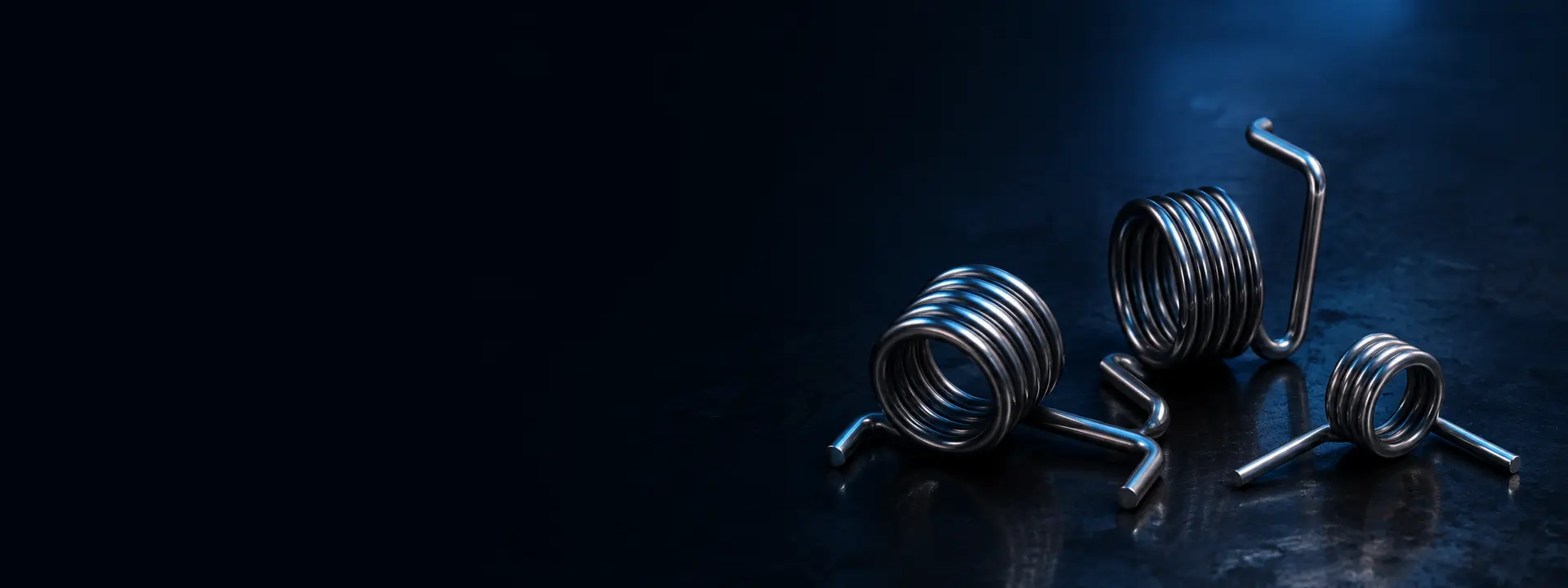
Springs operating around a shaft or pivot, with winding direction, leg geometry, working angle and torque tailored to the project.
Request a QuoteA torsion spring stores energy in its coils when rotational displacement is applied to one or both legs. The resulting torque varies with the operating angle according to the designed characteristic.
Winding direction is matched to the direction of loading. Shaft diameter, coil inside diameter, leg contact points and maximum operating angle are assessed together for safe operation.
Controlled achievement of specified torque at designated angles.
Straight, bent, hooked or project-specific connection legs.
Right-hand or left-hand winding selected for the direction of mechanism movement.
Safe operating-angle range without permanent deformation.
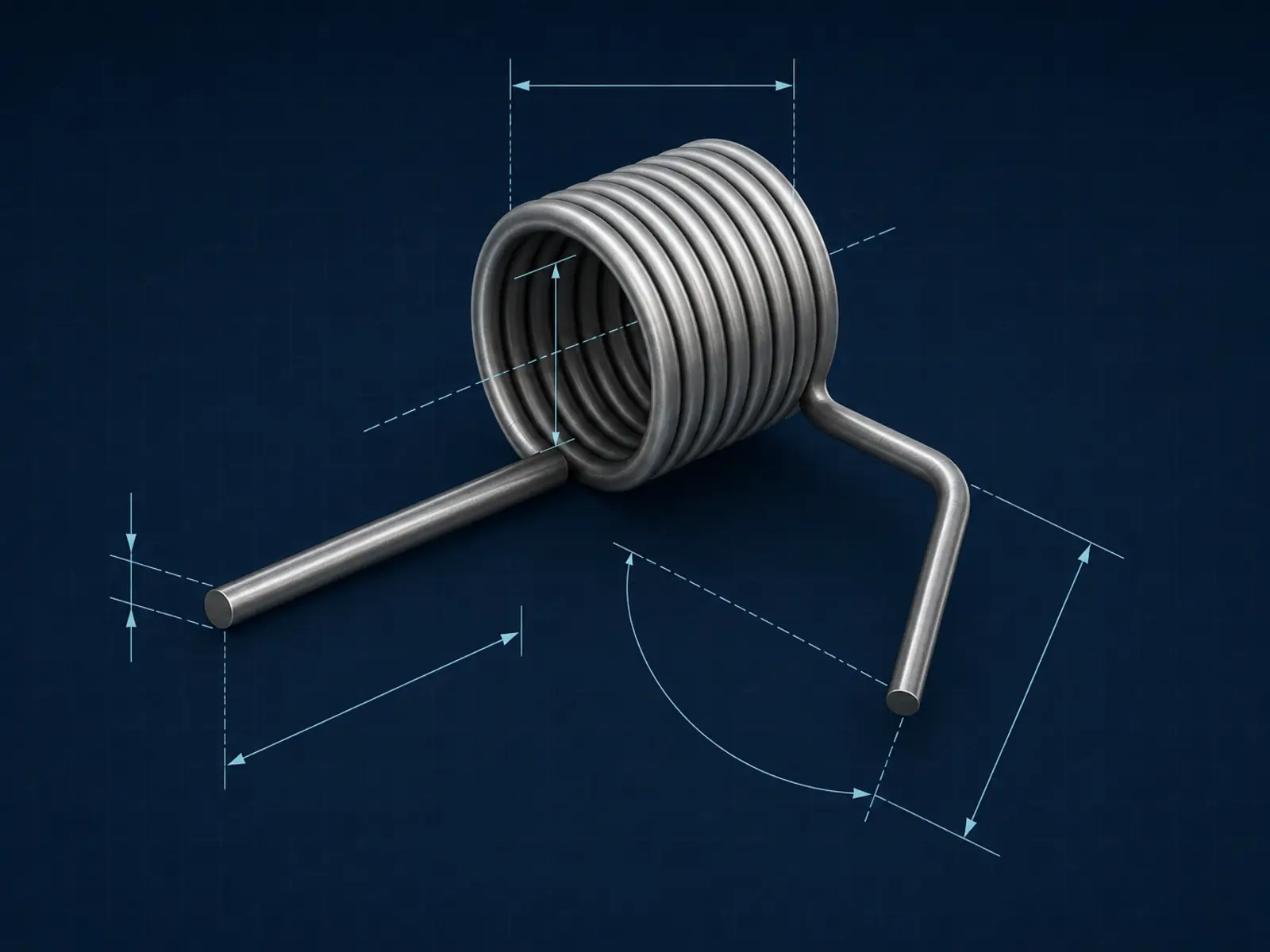

The body is formed to the specified inside diameter and number of coils. CNC tooling then forms the length, angle, direction and special ends of both legs; in-process checks verify fitment.
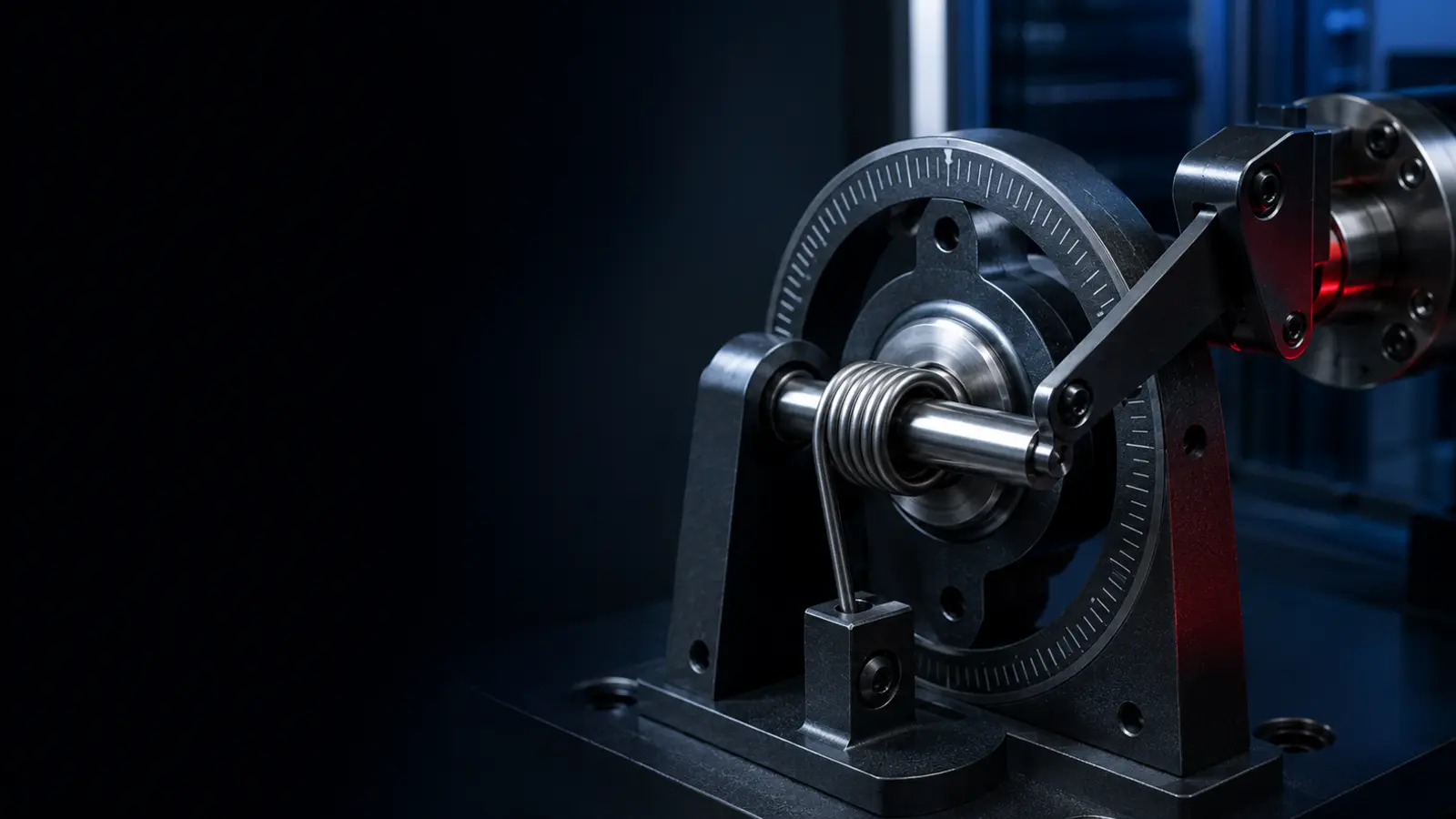
The spring body is placed on a suitable mandrel, one leg is referenced and a specified angular movement is applied to the other. Torque, leg position and return behavior are inspected at defined angles; cycle life is verified where required.
Provide the drawing, shaft diameter, winding direction, leg geometry, initial position, operating angles and specified torque values.